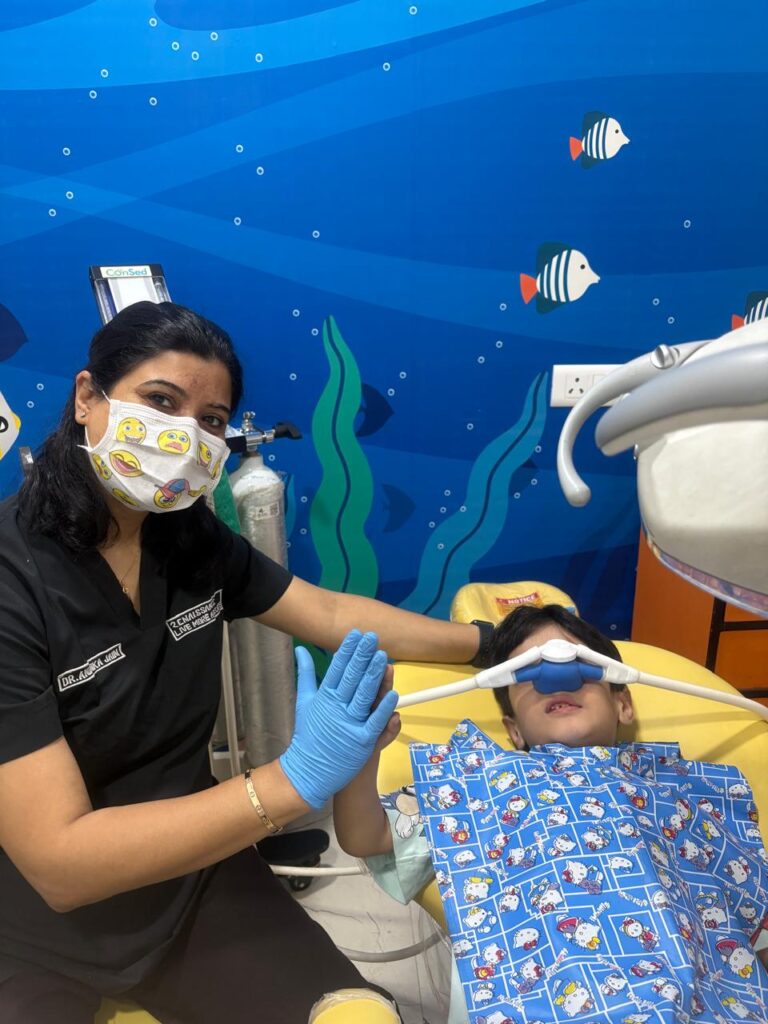
10 Simple Habits That Can Protect Your Child’s Teeth for Life — A Ghaziabad Parent’s Complete Guide —
10 Simple Habits That Can
Protect Your Child’s Teeth for Life
— A Ghaziabad Parent’s Complete Guide —
By the specialist pediatric dental team at Child Dentist Indirapuram, Jaipuria Mall, Ghaziabad
🧒8 in 10Indian kids have dental problems
😶Age 1When first dental visit should happen
🦷Habit-BasedPrevention beats cure every time
What if the biggest factor in your child’s dental health was not their genes, not their diet alone — but five minutes of the right habits, done consistently, every single day?
The truth is, most dental problems children suffer — cavities, gum disease, crooked teeth, bad breath — are largely preventable. And prevention does not require expensive treatments or drastic changes. It requires simple, daily habits, started early and maintained consistently.
At Child Dentist Indirapuram — your trusted Kids Dental Clinic in Indirapuram, located at Jaipuria Mall, Ahinsa Khand 2, Ghaziabad — our specialist pediatric dental team treats hundreds of young patients every month. The children with the healthiest teeth are almost always the ones whose parents followed some version of these 10 habits.
Whether your child is 8 months or 14 years old, these habits apply. Some you may already be doing. Others may surprise you. All of them are backed by dental science and proven in our clinical experience in Ghaziabad and the wider Delhi-NCR region.
🦷01
Start Before the First Tooth Even AppearsHabit Age: Birth onwardsMost parents think dental care begins when the first tooth erupts. It actually begins the moment your baby arrives. The bacteria that cause tooth decay can be passed from parent to child through shared utensils and saliva — and the oral environment you establish in those early weeks shapes your child’s dental microbiome for years.What to do from birth:• After every feed, gently wipe your baby’s gums with a clean, damp muslin cloth or gauze pad• Never share spoons, blow on food, or test bottle temperature with your mouth — this transfers decay-causing bacteria• Once the first tooth appears, switch to a soft-bristled infant toothbrush immediately✅ Habit Tip: Wipe gums after every feed with damp gauze. The habit of cleaning after eating starts before teeth do.
🪥02
Brush Twice Daily — The Right Way, Every TimeHabit Age: First tooth onwardsBrushing is the cornerstone of dental health — but technique and consistency matter far more than most parents realise. Brushing ‘roughly’ twice a day delivers far worse results than brushing correctly twice a day.The correct approach by age:• 0–2 years: Tiny smear of fluoride toothpaste (grain of rice size) on a soft infant brush. Parent does all the brushing• 3–6 years: Pea-sized amount of fluoride toothpaste. Parent supervises and finishes up — children lack the fine motor skills to clean effectively on their own• 7–12 years: Encourage two-minute brushing. An electric toothbrush is strongly recommended — research consistently shows 20% better plaque removal versus manual• 13+: Independent brushing with parental spot-checks periodicallyThe most missed areas: The back molars and the gumline. Teach your child to angle the brush at 45 degrees toward the gum for the inner surfaces.✅ Habit Tip: Set a two-minute timer. Make it non-negotiable after breakfast and before bed — not optional, not skippable.
🧵03
Floss Daily — Starting Earlier Than You ThinkHabit Age: When two teeth touch (often age 2–3)Flossing is the most skipped dental habit in Indian households — and also one of the most important. Once two teeth are close enough to touch, a toothbrush cannot reach between them. The spaces between teeth account for a significant proportion of childhood cavities.• Begin flossing as soon as two of your child’s teeth are in contact — this can be as early as age 2• Use soft floss picks or child-specific flossers for younger children — easier to handle than traditional floss• The focus areas: between the back molars (where food packs most densely) and the front incisors• Bleeding while flossing for the first 1–2 weeks is normal — it signals inflammation that will resolve as the habit continuesNote for Ghaziabad parents: Children in Indrapuram and nearby areas who eat a diet rich in chapati, rice, and sticky sweets are particularly prone to interdental (between-teeth) cavities. Flossing is not optional for this diet profile — it is essential.✅ Habit Tip: Floss once daily at bedtime, after brushing. This removes what brushing leaves behind in the spaces where cavities most commonly form.
💧04
Make Water the Default DrinkHabit Age: From weaning onwardsThe single most underestimated dental health intervention for Indian children is simply replacing sugary drinks with water. The impact is enormous — and it costs nothing.Why sugary drinks are so damaging:• Every sip of a sweetened drink creates an acid attack on tooth enamel lasting 20–40 minutes• A child who sips a fruit juice box over an hour is essentially bathing their teeth in acid for that entire hour• This includes: packaged fruit juices, flavoured milk, sports drinks, nimbu pani with sugar, and aerated drinks — all extremely common in Ghaziabad householdsWhat to substitute:• Plain water: the best drink for teeth at any age• Plain milk (not flavoured): neutral to slightly beneficial for enamel due to calcium content• Coconut water: naturally low sugar, hydrating, and tooth-friendlyA particular note for Ghaziabad parents: Many local children drink packaged juice boxes in their school tiffin daily. One small change — replacing that juice box with a water bottle — can reduce cavity risk by a clinically significant margin.✅ Habit Tip: Replace one sugary drink per day with water. Start with the school tiffin. This single swap has measurable impact on cavity rates.
🍎05
Choose Tooth-Friendly SnacksHabit Age: From weaning onwardsWhat your child snacks on between meals has as much impact on dental health as what they eat at meals — sometimes more, because snacks tend to linger on teeth rather than being followed by a full meal and water.Snacks that protect teeth:• Fresh fruits and vegetables: apple slices, carrots, cucumber — stimulate saliva flow, which naturally cleans teeth• Cheese: raises mouth pH and actively protects enamel — one of the best snack foods for dental health• Plain nuts: low sugar, high in minerals, no sticky residue• Plain water: always, after any snackSnacks that cause the most damage:• Sticky sweets: toffees, gummies, fruit rollups — cling to enamel and fuel bacteria for hours• Biscuits and crackers: stick in the grooves of back teeth and are highly fermentable by decay bacteria• Flavoured yoghurt and ‘fruit’ snack packs: often contain as much sugar as a sweetThe Ghaziabad context: Parle-G biscuits, Kurkure, chocolate wafers and packet chips are standard school snacks for most children in Indrapuram and the NCR. These are among the most cavity-producing foods in a child’s diet. Small substitutions — replacing biscuits with fresh fruit or plain popcorn — make a significant difference over time.✅ Habit Tip: Offer whole fruit or cheese as after-school snacks instead of biscuits or packaged sweets. Pair every snack with a glass of water.
🚫06
No Bottle at Bedtime — EverHabit Age: 0 – 24 months (critical window)‘Bottle caries’ — also called Early Childhood Caries — is one of the most severe, painful, and entirely preventable dental conditions we see in our Kids Dental Clinic in Indirapuram. It is caused by a single, very common habit: putting a baby or toddler to sleep with a bottle containing milk, formula, or any sweetened liquid.Why it causes such severe damage:• When a child falls asleep with a bottle, the liquid pools around the upper front teeth for hours• Saliva production drops dramatically during sleep, removing its natural protective and antibacterial effect• The result is prolonged acid exposure on teeth that have just erupted — causing rapid, aggressive decay in children as young as 18 months• Bottle caries can destroy all the upper front baby teeth within months, requiring treatment under general anaesthesia in young childrenIf your child needs something to settle for sleep, offer plain water in the bottle — or better, transition to a cup by 12 months for all drinks other than breastfeeding.✅ Habit Tip: Make a firm rule: no milk or juice bottle after teeth brushing at bedtime. Water only, or nothing. This single habit prevents some of the most severe childhood dental damage.
💊07
Use Fluoride — The Right Amount, the Right WayHabit Age: First tooth onwardsFluoride remains the most evidence-backed tool in children’s dental prevention, and yet it is also the most misunderstood. Parents worry it is harmful; others don’t use enough. The evidence is clear: correctly dosed fluoride dramatically reduces cavity risk.The facts on fluoride for Indian children:• Use fluoride toothpaste from the first tooth: a rice-grain amount for 0–3 years, a pea-sized amount for 3 years and above• Children under 6 should not rinse their mouth with water after brushing — spitting is sufficient. A small amount of residual fluoride toothpaste provides continued protection• Professional fluoride varnish application every 6 months by your Pediatric Dentist in Ghaziabad can reduce cavity risk by up to 43% — this is a quick, painless, hugely effective intervention• Children who eat a high-sugar diet or have had previous cavities benefit the most from professional fluoride applicationsAt Child Dentist Indirapuram, fluoride varnish application is a standard part of every 6-monthly check-up for our patients.✅ Habit Tip: Ask your pediatric dentist about professional fluoride varnish at every 6-monthly visit. It takes under 5 minutes and provides months of cavity protection.
🔒08
Ask About Pit and Fissure SealantsHabit Age: 6–7 years (first permanent molars), 11–13 years (second molars)This is the dental habit that most Ghaziabad parents have never heard of — and it is arguably the single most effective preventive procedure available for school-age children.What are pit and fissure sealants?• The back molars have deep grooves and pits on their biting surfaces that are virtually impossible to clean with a toothbrush• These grooves are responsible for approximately 90% of all cavities in children’s permanent back teeth• Sealants are thin, tooth-coloured resin coatings painted into these grooves by your pediatric dentist — they seal the grooves off, making them smooth and easy to clean• The procedure is completely painless, takes about 15 minutes per tooth, requires no anaesthesia or drilling, and lasts 5–10 years• Research shows that sealants reduce the risk of decay in back teeth by 80%When to apply: ideally within 1–2 years of each molar erupting — for the first permanent molars (around age 6–7) and again for the second permanent molars (around age 11–13).✅ Habit Tip: When your child’s first permanent molars come in around age 6, ask your Best Child Dentist in Indirapuram about sealants immediately. This is the best investment in your child’s dental future.
🏏09
Protect Teeth During SportsHabit Age: From age 6 onwards in any contact sportDental injuries are among the most common sports injuries in children worldwide — and the NCR region’s love of cricket, football, kabaddi, and basketball means this habit is particularly relevant for Ghaziabad families.• A single dental impact can fracture, displace, or knock out a permanent tooth — injuries that can require expensive treatment and affect your child’s smile for life• A custom-fitted mouthguard absorbs and distributes the force of impacts that would otherwise go directly to teeth, jaws, and gums• Over-the-counter boil-and-bite mouthguards offer some protection, but a custom-fitted guard from your pediatric dentist provides significantly better fit, protection, and comfort• Children are more likely to actually wear a mouthguard that fits well and doesn’t interfere with breathing or speakingActivities that warrant a mouthguard: cricket (batting and fielding), football, basketball, martial arts, skating, cycling, gymnastics.Emergency tip for parents: If a permanent tooth is knocked out, do NOT let it dry. Place it back in the socket if possible, or keep it in milk or saliva and rush to your nearest Best Pediatric Dentist near you within 30–60 minutes. Time is critical.✅ Habit Tip: If your child plays any contact or impact sport, speak to your Kids Dentist in Indirapuram about getting a custom-fitted mouthguard made. It is one of the most underused protective tools available.
📅10
6-Monthly Dental Check-Ups — Non-NegotiableHabit Age: From the first tooth — for lifeThis is the habit that ties all the others together. Every 6 months, a visit to your Child Dentist in Indirapuram gives your child’s dental health a comprehensive professional review that no amount of excellent home care can replace.What happens at a 6-monthly check-up at Child Dentist Indirapuram:• Full dental examination: cavities, gum health, jaw development, eruption pattern check• Professional cleaning: removal of tartar and plaque that brushing cannot address• Fluoride varnish application: fast, painless, highly effective• Orthodontic monitoring: are teeth erupting correctly? Is early intervention needed?• Oral habit review: thumb sucking, mouth breathing, tongue thrusting — assessment and guidance• Dietary counselling: personalised advice for your child’s specific cavity riskThe most important point: dental problems caught at 6-monthly check-ups are almost always small, easy, and inexpensive to treat. The same problems caught at 12 or 18 months often require far more extensive — and far more stressful — treatment.For families in Indrapuram, Ahinsa Khand, Vaishali, Vasundhara, Crossing Republik, and the wider Ghaziabad area, Child Dentist Indirapuram at Jaipuria Mall is your closest dedicated paediatric dental specialist — just minutes from home.✅ Habit Tip: Book your child’s next dental check-up right now — before you close this article. 6 months goes faster than you think. Visit childdentistindirapuram.com.
Your 10-Habit Quick Reference Card
Print this, pin it to your fridge, or screenshot it. Share it with grandparents and caregivers:
#
Habit
Start Age
Most Important For
1
Clean gums before teeth erupt
Birth
Healthy oral microbiome
2
Brush twice daily, correct technique
First tooth
Plaque and cavity prevention
3
Floss daily
When teeth touch
Between-teeth cavities
4
Water as default drink
From weaning
Reducing acid exposure
5
Tooth-friendly snacks
From weaning
Reducing sugar-fuelled decay
6
No bottle at bedtime
0 – 24 months
Preventing bottle caries
7
Fluoride toothpaste + varnish
First tooth
Enamel strengthening
8
Pit and fissure sealants
Age 6–7, 11–13
Protecting back molar grooves
9
Mouthguard for sports
From age 6
Preventing dental trauma
10
6-monthly dental check-up
From age 1
Catching problems early
Why These Habits Matter Even More in Ghaziabad
These 10 habits matter everywhere — but three specific local factors make them even more critical for families in Indrapuram, Indirapuram, Vaishali, Vasundhara, and Crossing Republik:
Hard Water in GhaziabadGhaziabad’s municipal water supply is high in calcium and magnesium — classified as hard water. While this does not directly cause decay, it builds up on teeth as scale (tartar), makes plaque harder to remove, and creates rougher enamel surfaces where bacteria adhere more easily. Professional cleaning every 6 months is particularly important in this region.Air Pollution and Mouth BreathingGhaziabad’s air quality is among the worst in India. Many local children develop chronic nasal congestion, leading to habitual mouth breathing. This dries the oral cavity, dramatically reduces saliva’s natural protective effect, and significantly increases cavity and gum disease risk. If your child breathes through their mouth consistently, mention it to your Pediatric Dentist in Ghaziabad — it needs assessment and management.High-Sugar Diet Culture in NCRPackaged biscuits, toffees, sweetened milk drinks, and flavoured snacks are deeply embedded in school and home culture across Indrapuram and the NCR. Eight out of ten Indian children showing dental issues is directly linked to this dietary pattern. Habits 4 and 5 in this guide are especially high-impact for families in this region.
About Child Dentist Indirapuram
Your Child’s Smile is Our SpecialityJaipuria Mall, Ahinsa Khand 2, Indrapuram, Ghaziabad – 201014childdentistindirapuram.com• Specialist Pediatric Dentists — postgraduate qualified in Pedodontics (Paediatric Dentistry)• Child-friendly, anxiety-free environment — children love coming to us• Painless treatment techniques — child-appropriate anaesthesia and modern minimally invasive dentistry• Complete preventive services: fluoride varnish, pit and fissure sealants, dietary counselling• Custom mouthguards, habit-breaking appliances, space maintainers, orthodontic referrals• 6-monthly check-up program for all patients — the foundation of lifelong dental health• Serving: Indrapuram, Ahinsa Khand, Vaishali, Vasundhara, Crossing Republik, Noida, East Delhi
Locality
Approx. Travel Time
Ahinsa Khand 1 & 2, Indrapuram
Walking distance
Vaishali, Ghaziabad
10–15 min via NH-9
Vasundhara
12–18 min
Crossing Republik
15–20 min
Noida Sector 62
20 min
Mayur Vihar, East Delhi
25–30 min
Frequently Asked Questions
❓ At what age should I first take my child to the dentist?By age 1, or within 6 months of the first tooth erupting — whichever comes first. Early visits establish healthy habits, allow the dentist to spot early problems, and create a positive dental experience that lasts a lifetime. At Child Dentist Indirapuram, we warmly welcome infants and toddlers.
❓ My child is afraid of the dentist. What should I do?Dental anxiety is extremely common in children — and it is precisely why paediatric dentists receive specialist training in child behaviour management. Our team uses Tell-Show-Do techniques, positive reinforcement, and a completely unhurried approach. Most children leave our clinic saying it was nothing like what they feared. The earlier a child starts coming, the easier it is.
❓ Are these habits enough, or does my child still need to see a dentist?Both are essential — they complement each other. These 10 habits are your home defence system. Your 6-monthly dental check-up is the professional inspection and reinforcement that catches what home care misses. Neither alone is as effective as both together.
❓ What is the best toothbrush for children?For children under 7, a soft-bristled manual brush with a small head works well if parents supervise. For age 7 and above, an electric toothbrush with a round oscillating head provides significantly better plaque removal. Our team at Child Dentist Indirapuram is happy to give personalised recommendations at your child’s check-up.
❓ How do I find the Best Pediatric Dentist near me in Ghaziabad?If you are in Indrapuram, Indirapuram, Vaishali, Vasundhara, Crossing Republik, or the wider Ghaziabad area, Child Dentist Indirapuram at Jaipuria Mall, Ahinsa Khand 2 is your closest dedicated paediatric dental specialist. Visit childdentistindirapuram.com to book your child’s appointment online.
Start Protecting Your Child’s Teeth TodayThe best time to build these habits was the day your child’s first tooth appeared. The second best time is right now.Jaipuria Mall, Ahinsa Khand 2, Indrapuram, Ghaziabad – 201014Book Your Child’s FREE Check–Up at childdentistindirapuram.comServing Indrapuram · Vaishali · Vasundhara · Crossing Republik · Noida · East Delhi
Related Articles on childdentistindirapuram.com
• 7 Warning Signs Your Child May Have a Hidden Dental Problem
• When Should My Child’s First Dental Visit Be? A Complete Guide for Ghaziabad Parents
• Pit and Fissure Sealants for Kids in Indirapuram — What Parents Need to Know
• How to Prepare Your Child for a Stress-Free Dental Visit
• Baby Teeth vs Permanent Teeth — Why Both Matter More Than You Think